

The delicate tissue beneath the eyes presents unique challenges for aesthetic medical practitioners. Thin skin, complex vascular anatomy, age-related volume loss, and changes in the underlying support structures can all contribute to visible infraorbital hollows and shadows.
For qualified injectors, successful treatment requires careful patient selection, detailed anatomical knowledge, an appropriate injection technique, and a dermal filler suited to the treatment area. Within the Belotero portfolio, Belotero Balance is one product practitioners may evaluate when developing treatment plans for appropriate patients.
Explore our selection of professional dermal filler supplies.
Can Belotero Be Used Under the Eyes?
Belotero Balance (+) is approved in the United States for volume augmentation to improve infraorbital hollows in adults over the age of 21. It is also approved for injection into the mid-to-deep dermis for the correction of moderate-to-severe facial wrinkles and folds, such as nasolabial folds.
The product is a cross-linked hyaluronic acid injectable implant. The Belotero Balance (+) formulation contains lidocaine to help manage discomfort during administration.
Clinics should verify the exact product name, formulation, package information, and authorized indications before use. Belotero products sold in different markets are not necessarily interchangeable, and indications may vary according to the product version and jurisdiction.
Why the Under-Eye Area Requires Specialized Assessment
The infraorbital area has thinner skin than many other facial treatment areas. Changes in skin quality, fat compartments, bone structure, retaining ligaments, and surrounding tissues can influence the appearance of shadows or hollows beneath the eyes.
Not every apparent dark circle is caused by a volume deficit. Under-eye concerns may also be influenced by pigmentation, prominent blood vessels, skin laxity, edema, fat protrusion, or lighting created by facial anatomy. Adding filler may not improve every presentation and can be inappropriate for some patients.
A professional assessment should therefore distinguish between true infraorbital volume loss and concerns that may require a different treatment approach.
Clinical Factors to Evaluate Before Treatment
Before considering an under-eye filler procedure, the practitioner should perform a comprehensive consultation and medical assessment. Relevant considerations may include:
- The cause and severity of the infraorbital hollow
- Lower-eyelid skin thickness and elasticity
- Existing puffiness, edema, or fat prolapse
- Midface volume and structural support
- Facial symmetry and orbital anatomy
- Previous fillers, surgery, or energy-based treatments
- Current medications and supplements
- History of allergies or adverse reactions
- Active inflammation or infection near the treatment site
- The patient’s expectations and treatment goals
Practitioners should review the complete contraindications, warnings, precautions, and adverse-event information contained in the current product instructions before treatment.
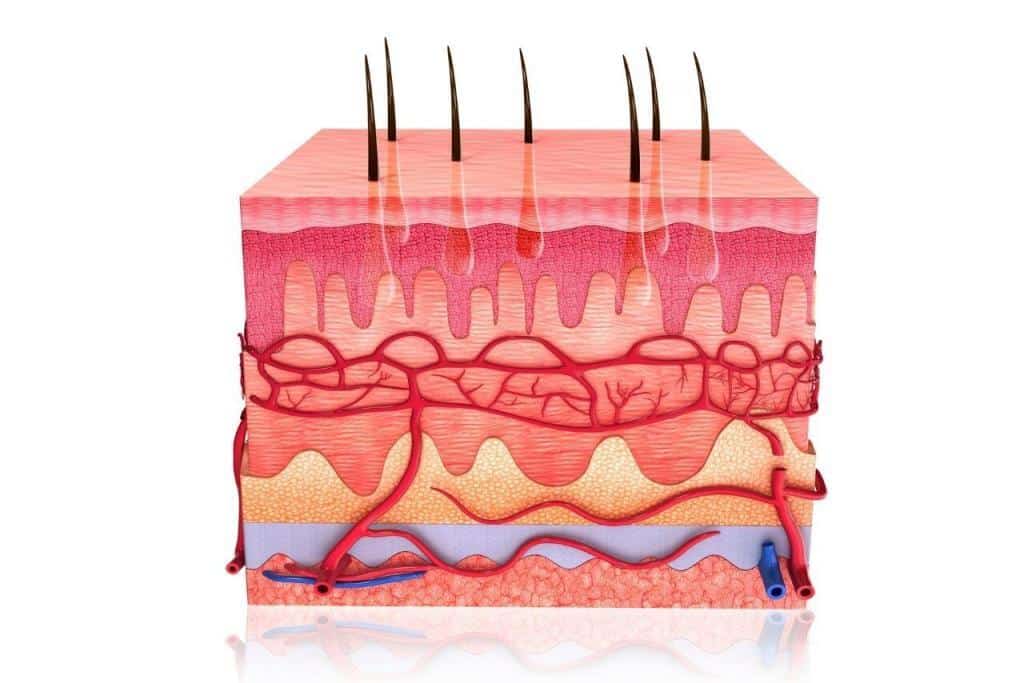
Understanding the Anatomy of the Treatment Area
Under-eye filler treatment requires more than a general understanding of the skin. Practitioners must consider the relationship between the epidermis, dermis, subcutaneous tissue, muscles, retaining ligaments, fat compartments, orbital rim, nerves, and blood vessels.
Anatomical knowledge is especially important because the appearance of the infraorbital hollow can be affected by structures beyond the immediate depression beneath the eye. In some patients, loss of support in the medial cheek or midface may contribute to the visible transition between the lower eyelid and cheek.
The Epidermis
The epidermis is the outermost layer of the skin. Although filler is not placed within this superficial layer, epidermal thickness, pigmentation, texture, and photodamage can influence the appearance of the under-eye area.
Thin or translucent skin may make underlying vessels and shadows more noticeable. These characteristics should be considered when determining whether filler is likely to address the patient’s primary concern.
The Dermis
The dermis lies beneath the epidermis and contains collagen, elastin, blood vessels, nerves, hair follicles, and glands. Dermal thickness and elasticity affect how the skin responds to changes in the underlying tissue.
Product placement depth must be selected according to the authorized product instructions, the treatment area, the patient’s anatomy, and the practitioner’s training.
Subcutaneous Tissue and Deeper Structures
Subcutaneous tissue contains fat and connective structures that contribute to facial contour and support. Age-related changes in facial fat compartments and bone can alter the transition between the lower eyelid and cheek.
Assessment of the deeper facial structures can help practitioners determine whether treatment should focus on the infraorbital hollow, the midface, or another contributing area.

How Does Belotero Balance Work?
Belotero Balance is formulated with cross-linked hyaluronic acid. Hyaluronic acid is a naturally occurring polysaccharide found in connective tissues and plays an important role in tissue hydration and volume.
When appropriately injected, a hyaluronic acid dermal filler adds temporary volume within the selected tissue plane. This may help improve the transition between the lower eyelid and cheek in patients with suitable anatomy and a true infraorbital hollow.
Clinical results depend on several factors, including:
- Patient anatomy
- Severity of the hollow
- Product selection
- Injection depth and placement
- Amount administered
- Practitioner technique
- Individual tissue response
Practitioners should communicate that results vary and that no specific degree or duration of correction can be guaranteed.
Belotero Balance and the Belotero Product Portfolio
Aesthetic clinics may maintain several Belotero formulations to support different treatment plans. However, each product has its own characteristics, package information, intended treatment areas, and market-specific indications.
Belotero Balance
Belotero Balance is a cross-linked hyaluronic acid dermal filler. In the United States, Belotero Balance (+) is approved for moderate-to-severe facial wrinkles and folds and for volume augmentation to improve infraorbital hollows in adults over 21.
Professional buyers should confirm whether the supplied product is Belotero Balance, Belotero Balance (+), or another market-specific presentation before adding it to clinical inventory.
Belotero Soft
Belotero Soft is positioned within the broader international Belotero portfolio as a formulation for selected superficial lines and delicate treatment areas.
Its availability and authorized uses vary by market. Practitioners should not assume that indications assigned to Belotero Balance also apply to Belotero Soft.
Belotero Intense
Belotero Intense is another formulation within the international Belotero range. It may be considered by qualified practitioners for treatment objectives requiring different gel characteristics than those offered by softer formulations.
Before use, clinics should review the current instructions for the specific product and confirm its permitted treatment areas.
Belotero Volume
Belotero Volume is positioned within the international portfolio for deeper volumization and facial contouring applications.
It should not be treated as a substitute for Belotero Balance in the infraorbital area. Product choice must be based on the individual formulation, authorized indications, injection depth, and clinical treatment plan.
Planning an Under-Eye Filler Procedure
The exact procedure depends on the patient, product, and practitioner. A professional treatment workflow may include the following stages:
Consultation and Medical History
The practitioner should review the patient’s medical history, previous aesthetic procedures, allergies, medications, current skin condition, and treatment expectations.
Patients should be informed about alternative treatment options and the possibility that filler may not be appropriate for their particular under-eye concern.
Facial and Anatomical Assessment
The lower eyelids and midface should be examined at rest and during facial movement. Practitioners may assess the patient from several angles and under consistent lighting to distinguish structural hollowing from pigmentation, edema, or skin-quality concerns.
Product and Technique Selection
The practitioner determines whether the selected product is appropriate and establishes the planned injection depth, entry points, volume, and technique. Treatment should be performed using aseptic procedures and in accordance with the current product instructions.
Documentation and Traceability
Clinics should document the treatment plan and maintain appropriate product records. These may include:
- Product name and formulation
- Lot or batch number
- Expiration date
- Amount administered
- Treatment location
- Injection technique
- Patient consent
- Post-treatment instructions
Clinical photographs may also be taken according to clinic policy and applicable privacy requirements.
Potential Side Effects and Complications
Expected injection-site reactions may include swelling, bruising, redness, tenderness, firmness, itching, discoloration, or temporary irregularities. The frequency and duration of these reactions vary.
Under-eye treatment can also result in prolonged swelling, contour irregularities, visible product, asymmetry, or an unwanted bluish appearance in superficial tissue. Appropriate product selection and placement are important, but they do not eliminate all risks.
Serious complications associated with dermal filler injections can include vascular occlusion, ischemia, tissue damage, visual impairment, blindness, or stroke. Although these events are uncommon, practitioners must be trained to recognize warning signs and initiate an appropriate emergency response.
Clinics offering injectable treatments should maintain documented complication-management protocols, suitable emergency supplies, and appropriate referral pathways.
Medication and Pre-Treatment Considerations
Practitioners should review medications and supplements that may affect bruising or bleeding. Patients should not be instructed to discontinue prescribed medication without consulting the healthcare professional responsible for that medication.
Treatment may need to be postponed when active infection, inflammation, skin eruptions, or other contraindicating conditions are present in or near the planned treatment area.
Post-Treatment Care and Follow-Up
Patients should receive written aftercare instructions based on the product used, treatment performed, and practitioner’s clinical protocol.
Instructions should explain:
- Expected short-term treatment-site reactions
- Activities or products that should temporarily be avoided
- Whether the area should be touched or manipulated
- Symptoms that require prompt clinical assessment
- How to contact the clinic outside regular hours
- When a follow-up evaluation is recommended
Patients should be instructed to seek immediate medical attention for unusual or worsening pain, pronounced blanching or discoloration, visual symptoms, neurological changes, or other signs of a serious complication.
Professional Training and Administration
Belotero dermal fillers should be administered only by appropriately qualified and licensed medical professionals. Under-eye injection requires advanced knowledge of facial anatomy, vascular structures, product behavior, complication recognition, and emergency management.
Product availability alone does not establish clinical competency. Practices should ensure that injectors have completed suitable education and hands-on training before introducing infraorbital filler treatments.
Belotero Inventory Considerations for Aesthetic Clinics
Professional buyers should evaluate clinical needs and product characteristics before placing a dermal filler order. Procurement considerations include:
- Clinic treatment volume
- Practitioner training and product familiarity
- Authorized indications in the clinic’s jurisdiction
- Product formulation and package configuration
- Storage and handling requirements
- Lot traceability and expiration dates
- Expected inventory turnover
- Supplier reliability
Stocking several formulations may give a practice greater flexibility, but products should be ordered according to realistic treatment demand to reduce the risk of expiration or unnecessary inventory.
Sourcing Authentic Belotero Products
Injectable products should be obtained through established professional supply channels. Before accepting or administering a product, clinics should inspect:
- The product name and formulation
- Outer packaging and seals
- Lot or batch information
- Expiration date
- Storage history, when applicable
- Labelling and included documentation
- Supplier records and traceability
Products with damaged packaging, incomplete identification, questionable storage conditions, or unclear origins should not be administered.
The Bottom Line
Belotero Balance (+) provides qualified medical practitioners with an approved hyaluronic acid filler option for improving infraorbital hollows in appropriately selected adults. Successful treatment requires detailed assessment, advanced anatomical knowledge, conservative planning, appropriate product placement, and preparation for potential complications.
The wider Belotero portfolio includes formulations with different characteristics and intended applications. Clinics should evaluate each product separately and follow the current labelling rather than assuming that all Belotero fillers have the same indications or injection requirements.
Health Supplies Plus offers Belotero products and other professional aesthetic supplies exclusively to qualified medical buyers. Licensed practitioners can review our available products and shop professional dermal fillers online for their clinical inventory.

About the Author: Doris Dickson is a specialist writer for Health Supplies Plus, focusing on the aesthetic medicine industry. She diligently researches cosmetic treatments and products to provide clear, concise information relevant to licensed medical professionals. Her work supports Health Supplies Plus’s commitment to being a reliable informational resource and trusted supplier for the aesthetic community.
Disclaimer: The content provided in this article is intended for informational purposes only and is directed towards licensed medical professionals. It is not intended to be a substitute for professional medical advice, diagnosis, or treatment, nor does it constitute an endorsement of any specific product or technique. Practitioners must rely on their own professional judgment, clinical experience, and knowledge of patient needs, and should always consult the full product prescribing information and relevant clinical guidelines before use. Health Supplies Plus does not provide medical advice.