

Weight management is increasingly relevant to aesthetic medicine, but prescription weight-loss therapy should be approached as medical care first, not as a cosmetic upsell. Wegovy® is a prescription semaglutide product used for chronic weight management in eligible patients alongside reduced-calorie nutrition, increased physical activity, and ongoing medical monitoring.
For aesthetic and cosmetic medical clinics, Wegovy may be relevant when a practice has the appropriate medical infrastructure, licensed prescribers, screening protocols, follow-up systems, and referral pathways. It should not be positioned as a quick aesthetic enhancer, a pre-surgery shortcut, or a guaranteed way to improve body-contouring outcomes.
This guide reviews injectable Wegovy dosing, patient selection, monitoring, side-effect management, and responsible integration into aesthetic medical settings.
Key Takeaways for Your Practice
- Prescription medication: Wegovy should only be prescribed and monitored by appropriately licensed healthcare professionals.
- Gradual titration: Injectable Wegovy is generally escalated stepwise to improve tolerability and reduce gastrointestinal side effects.
- Maintenance dose: The target maintenance dose for injectable Wegovy is typically 2.4 mg once weekly, or 1.7 mg once weekly in some patients when clinically appropriate.
- Eligibility matters: Wegovy is intended for chronic weight management in eligible patients, not casual cosmetic weight loss.
- Safety monitoring is essential: Clinics must screen for contraindications, medication interactions, pregnancy considerations, pancreatitis risk, gallbladder disease, kidney injury risk, and severe GI reactions.
- Aesthetic integration requires caution: Weight loss may affect facial volume, skin laxity, surgical planning, and body-contouring expectations, so patients need coordinated care.
Table of Contents
What Is Wegovy?
Wegovy® is a prescription semaglutide product used for chronic weight management in eligible patients. This article focuses on the injectable formulation, which is administered once weekly according to the prescribing information.
Wegovy is used with a reduced-calorie diet and increased physical activity. It is not intended as a stand-alone treatment, cosmetic slimming injection, or short-term event-preparation tool.
Eligibility should be based on current prescribing information, medical history, BMI, weight-related comorbidities, contraindications, pregnancy status, medication profile, and clinical judgment.
Mechanism of Action
Semaglutide is a GLP-1 receptor agonist. It works through pathways involved in appetite regulation, food intake, gastric emptying, and glucose-dependent insulin secretion.
Clinically, patients may experience reduced appetite, earlier satiety, and lower food intake. Weight loss is usually gradual and requires ongoing lifestyle support, monitoring, and long-term planning.
Because Wegovy slows gastric emptying, clinics should consider potential effects on gastrointestinal symptoms, medication absorption, and peri-procedural planning for patients undergoing surgery, sedation, or anaesthesia.
Wegovy Dosing Schedule
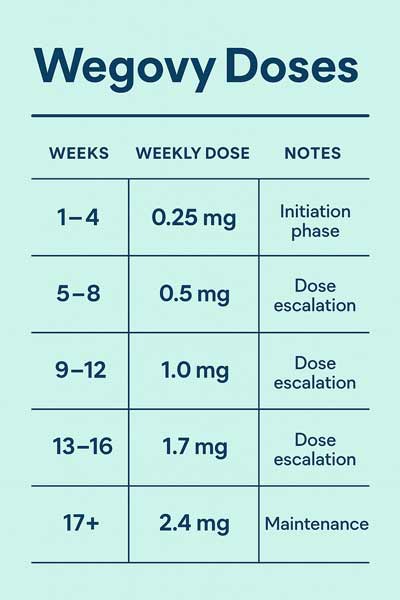
The injectable Wegovy dose is escalated gradually. The purpose of titration is to help patients tolerate treatment and reduce gastrointestinal adverse reactions. Individual dosing decisions should follow current prescribing information and clinician judgment.
| Weeks | Typical Weekly Dose | Clinical Focus |
|---|---|---|
| 1–4 | 0.25 mg once weekly | Initiation phase; review patient education, injection technique, nutrition plan, hydration, and early tolerability. |
| 5–8 | 0.5 mg once weekly | Continue tolerability monitoring; reinforce small meals, protein intake, hydration, and constipation prevention where appropriate. |
| 9–12 | 1.0 mg once weekly | Assess weight trend, GI symptoms, nutrition adequacy, medication interactions, and adherence. |
| 13–16 | 1.7 mg once weekly | Evaluate readiness for maintenance dosing and whether additional time at the current dose is needed for tolerability. |
| 17+ | 2.4 mg once weekly, or 1.7 mg once weekly in selected patients | Maintenance phase; continue medical monitoring, lifestyle support, adverse-event screening, and long-term treatment planning. |
This schedule is not a substitute for the prescribing information. Dose escalation, dose delays, re-initiation after missed doses, and discontinuation decisions should be made by the prescribing clinician.
Dose Adjustments and Clinical Considerations
Patients may need slower escalation or additional monitoring if they experience persistent nausea, vomiting, constipation, diarrhoea, abdominal pain, dehydration risk, or other tolerability concerns.
Clinical considerations may include:
- Holding at a current dose longer if escalation is poorly tolerated
- Reviewing whether symptoms are mild, moderate, severe, persistent, or worsening
- Assessing hydration and kidney injury risk if vomiting or diarrhoea occurs
- Reviewing medications that may affect blood glucose, gastrointestinal motility, or hydration status
- Reassessing therapy if side effects are persistent or clinically significant
- Following current prescribing information for missed doses or treatment re-initiation
Clinics should avoid informal “dose hacks,” unapproved compounded substitutes, non-standard escalation schedules, or patient-led dose changes without prescriber review.
Wegovy in Aesthetic Medical Care
Weight management may affect aesthetic treatment planning, but Wegovy should be integrated cautiously and medically. Weight loss can change facial volume, skin laxity, body contours, surgical risk, and patient expectations.
Potential aesthetic-care considerations include:
- Pre-procedure planning: Patients considering surgery or body contouring may need medical optimization before treatment.
- Skin laxity counseling: Weight loss can improve health metrics but may also reveal loose skin, facial volume loss, or body-contour concerns.
- Facial rejuvenation planning: Clinics should avoid overfilling during active weight loss and reassess facial volume after weight stabilizes.
- Body contouring timing: Procedures may be better planned after weight has stabilized, depending on the treatment and surgeon preference.
- Perioperative coordination: Patients taking GLP-1 medications should inform surgical, anaesthesia, and procedural teams.
Clinics should not promise that Wegovy will improve surgical safety, enhance contouring results, or reduce the number of cosmetic treatments. These outcomes depend on the patient, procedure, weight trajectory, nutrition status, and treating medical team.
Managing Side Effects
Common Wegovy side effects are often gastrointestinal and may be more noticeable during initiation or dose escalation.
Common Side Effects
- Nausea
- Vomiting
- Diarrhoea
- Constipation
- Abdominal discomfort or pain
- Indigestion or reflux symptoms
- Headache
- Fatigue
Patient Counseling for GI Tolerability
Clinics may counsel patients to:
- Eat smaller meals
- Avoid overeating
- Reduce high-fat or very heavy meals if they worsen symptoms
- Maintain hydration
- Prioritize adequate protein and micronutrient intake
- Report persistent vomiting, severe abdominal pain, dehydration symptoms, or worsening GI symptoms
Medication support for nausea or constipation should be clinician-directed and should consider the patient’s medical history and medication list.
Serious Warning Signs
Patients should be instructed to seek medical care promptly for:
- Severe abdominal pain that does not go away, especially with nausea or vomiting
- Signs of pancreatitis
- Symptoms of gallbladder disease, such as right upper abdominal pain, fever, jaundice, or clay-coloured stools
- Persistent vomiting or diarrhoea with dehydration risk
- Signs of allergic reaction, including swelling of the face, lips, tongue, or throat
- Symptoms of low blood sugar, especially in patients using insulin or insulin secretagogues
- Worsening mood, depression, or suicidal thoughts
Patient Selection
Wegovy should be considered only for eligible patients after proper medical assessment. It is not appropriate for cosmetic weight loss in patients who do not meet criteria or for patients with contraindications.
Assessment should include:
- BMI and weight-related comorbidities
- Full medical history
- Medication and supplement review
- Diabetes status and hypoglycaemia risk
- History of pancreatitis or gallbladder disease
- Kidney function considerations
- GI disease or severe GI symptoms
- Pregnancy, breastfeeding, or pregnancy planning
- History of medullary thyroid carcinoma or MEN2
- History of serious hypersensitivity to semaglutide or product components
- Mental health history and eating-disorder screening where appropriate
Contraindications and Major Precautions
Wegovy is contraindicated in patients with a personal or family history of medullary thyroid carcinoma, patients with Multiple Endocrine Neoplasia syndrome type 2, and patients with prior serious hypersensitivity to semaglutide or any product excipient.
Clinics should also take care with patients who have significant gastrointestinal disease, pancreatitis history, gallbladder disease, kidney injury risk, diabetes medications that can cause hypoglycaemia, pregnancy considerations, or upcoming surgery or sedation.
Monitoring and Follow-Up
Aesthetic clinics offering Wegovy should have a structured follow-up program. Weight management should include medical monitoring, nutrition guidance, side-effect review, and long-term maintenance planning.
Monitoring may include:
- Weight and waist measurements where appropriate
- Blood pressure and cardiometabolic risk factors
- GI side effects and hydration status
- Dietary intake and protein adequacy
- Medication changes
- Symptoms of pancreatitis, gallbladder disease, or hypoglycaemia
- Pregnancy status where relevant
- Mood and mental health screening when appropriate
- Procedure timing for cosmetic or surgical treatments
Patients should be reminded that stopping treatment may be associated with weight regain unless long-term lifestyle and maintenance strategies are in place.
Responsible Practice Integration
Adding prescription weight-management services to an aesthetic clinic requires more than stocking medication. Clinics need medical protocols, licensed prescribers, documentation systems, emergency escalation pathways, and clear separation between medical eligibility and cosmetic sales goals.
Responsible implementation may include:
- Using licensed prescribers with obesity-medicine or appropriate weight-management training
- Creating a medical intake and contraindication-screening workflow
- Documenting BMI, comorbidities, eligibility, consent, and follow-up
- Providing nutrition and lifestyle support or referral
- Establishing side-effect triage and urgent-care escalation protocols
- Coordinating with surgeons or anaesthesia teams before procedures
- Avoiding pressure-based packages that tie prescription medication to cosmetic procedures
- Ensuring marketing claims comply with prescription-drug advertising rules
Weight-management services should be framed as medical care. Cosmetic benefits may be secondary, variable, and dependent on the patient’s broader health plan.
Frequently Asked Questions About Wegovy in Aesthetic Clinics
Conclusion
Wegovy can be relevant to aesthetic medical practices when offered as part of a properly structured medical weight-management program. Its role should be grounded in patient eligibility, prescription-drug safety, lifestyle support, and ongoing monitoring rather than cosmetic sales positioning.
For clinics, responsible integration requires licensed prescribing, careful screening, clear documentation, side-effect management, surgical coordination, and realistic patient education. Weight loss may influence aesthetic planning, but cosmetic outcomes should never be guaranteed.
This content is intended for professional informational purposes only and does not replace medical advice, diagnosis, treatment, prescribing judgment, manufacturer instructions, legal guidance, regulatory guidance, payer policy review, or applicable clinical protocols. Wegovy should only be prescribed and monitored by appropriately licensed healthcare professionals in accordance with local laws, product labeling, contraindications, and standards of care.

About the Author: Doris Dickson is a specialist writer for Health Supplies Plus, focusing on the aesthetic medicine industry. She diligently researches cosmetic treatments and products to provide clear, concise information relevant to licensed medical professionals. Her work supports Health Supplies Plus’s commitment to being a reliable informational resource and trusted supplier for the aesthetic community.
Disclaimer: The content provided in this article is intended for informational purposes only and is directed towards licensed medical professionals. It is not intended to be a substitute for professional medical advice, diagnosis, or treatment, nor does it constitute an endorsement of any specific product or technique. Practitioners must rely on their own professional judgment, clinical experience, and knowledge of patient needs, and should always consult the full product prescribing information and relevant clinical guidelines before use. Health Supplies Plus does not provide medical advice.