

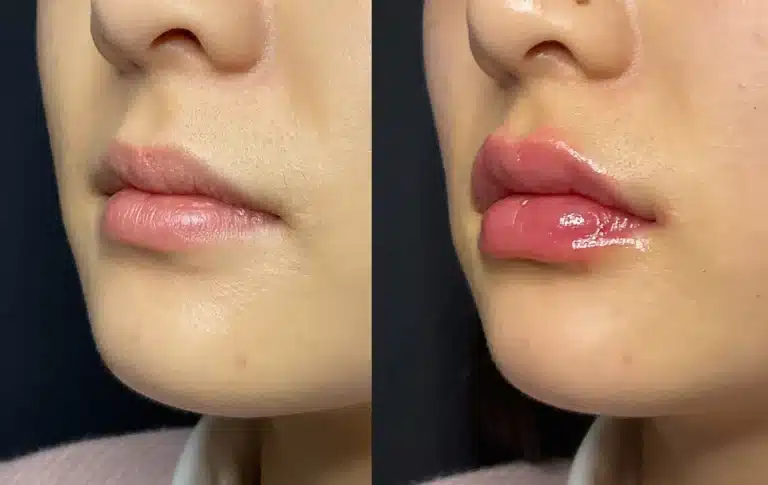
Social media trends often influence patient requests in aesthetic medicine, and the “Cherry Lips” look is one example. This lip style is commonly associated with centrally focused fullness, a defined Cupid’s bow, and a more pronounced lip-tubercle appearance while maintaining less lateral fullness.
For aesthetic clinics, trend-based requests should be approached with careful clinical judgment. A lip shape that appears attractive in a filtered image or on one patient may not be appropriate, natural-looking, or safe for another patient’s anatomy.
This guide reviews the Cherry Lips trend from a professional perspective, including patient assessment, lip anatomy, vascular safety, filler rheology, product selection, ethical considerations, and authentic sourcing for qualified clinics and licensed medical practitioners.
Explore professional HA dermal fillers available from Health Supplies Plus.
What Is the Cherry Lips Look?
The Cherry Lips look generally refers to a lip enhancement style that emphasizes central volume in the upper and lower lips. Rather than creating uniform fullness across the entire lip, the aesthetic focuses on a more concentrated central projection.
Common features may include:
- Pronounced central lip fullness
- More visible lip tubercles
- A defined Cupid’s bow
- Less emphasis on lateral lip fullness
- A rounded, youthful lip shape when anatomy supports it
Although patients may request this look by name, practitioners should avoid treating it as a fixed template. The safest and most natural-looking result depends on the patient’s natural lip structure, facial proportions, tissue capacity, and treatment history.
Anatomical Safety Comes First
Lip augmentation requires a detailed understanding of perioral anatomy. The lips are highly vascular, mobile, and sensitive, which means product selection and injection planning require precision.
Important anatomical structures include:
- Vermilion border
- Wet-dry border
- Lip tubercles
- Cupid’s bow
- Philtral columns
- Oral commissures
- Orbicularis oris muscle
- Superior and inferior labial arteries
The superior and inferior labial arteries are branches of the facial artery, and their course and depth can vary between patients. Because of this variability, any lip filler technique that aims to create specific projection points must be planned with vascular safety as the top priority.
Vascular occlusion is rare but serious. Warning signs may include severe pain, skin blanching, unusual discoloration, delayed capillary refill, tissue changes, or visual symptoms. Clinics offering HA filler treatments should maintain written emergency protocols and have hyaluronidase available for appropriate complication management.
Patient safety should always take priority over achieving a social-media-inspired shape.
Patient Assessment: Beyond the Trend
Not every patient is a good candidate for a Cherry Lips-inspired result. A thorough consultation should determine whether the requested shape is appropriate for the patient’s natural anatomy and overall facial balance.
Natural Lip Anatomy
Practitioners should evaluate:
- Natural lip size and shape
- Upper-to-lower lip ratio
- Existing central fullness
- Visibility of lip tubercles
- Cupid’s bow definition
- Symmetry and baseline asymmetry
- Tissue quality and elasticity
- Dental support and smile dynamics
- Previous filler placement or migration
Patients who already have some central fullness and defined lip structure may be more suitable for a subtle version of this look. Very thin lips, lips with limited tissue capacity, or lips with significant asymmetry may require a different approach or staged foundational treatment.
Facial Harmony
Lips should be assessed in relation to the full face. A lip style that looks appealing in isolation may appear disproportionate when viewed with the patient’s nose, chin, cheeks, jawline, and overall facial structure.
Professional judgment should guide whether the trend can be adapted in a way that looks balanced and natural for the individual patient.
Expectation Management
Patients may bring inspiration images from social media. These images may be edited, filtered, posed, or based on anatomy that differs significantly from the patient’s own lips.
Consultation should include discussion of:
- What is realistic for the patient’s anatomy
- Whether a staged approach is needed
- Expected swelling and settling
- Risk of overfilling or distortion
- How results may change with movement
- Maintenance and longevity expectations
- Possible risks and complications
Clear education helps patients understand that lip filler should enhance their natural anatomy rather than replicate another person’s result exactly.
Ethical Considerations for Trend-Based Lip Filler
Aesthetic trends can create strong patient demand, but practitioners should not provide treatment simply because a look is popular. The treatment should be clinically appropriate, proportionate, and aligned with the patient’s well-being.
Clinics should use caution when patients request:
- A dramatic change that does not suit their anatomy
- Excessive central projection
- A look based entirely on filtered or edited images
- Correction that would require unsafe volume
- Repeated treatment despite visible overfilling or migration
In some cases, the responsible recommendation may be a more subtle adaptation of the look, staged treatment, dissolving old filler first, or declining treatment if the request is not safe or appropriate.
Filler Selection for Cherry Lips-Inspired Results
Filler selection is especially important for lip treatments that require projection, definition, softness, and movement. The lips are dynamic, so an inappropriate product can lead to stiffness, visible lumps, migration, or an unnatural appearance.
Key filler characteristics to consider include:
Moderate Support
A filler used for central lip projection may need enough structure to support shape. However, a filler that is too firm may feel stiff or appear unnatural in a highly mobile area.
Good Cohesivity
Cohesivity describes how well the gel holds together. A cohesive filler may help maintain shape and reduce excessive spread when used appropriately.
Smooth Tissue Integration
Even when projection is desired, the product should integrate smoothly with the surrounding lip tissue. Poor integration may increase the risk of visible edges, palpable product, or irregular texture.
Appropriate Flexibility
Lips move constantly during speech, smiling, eating, and expression. Product flexibility is important for maintaining a natural look during movement.
HA Filler Options for Lip Treatment Planning
Several hyaluronic acid filler families may be discussed for lip and perioral treatment planning. Product availability, indications, and naming vary by region, so practitioners should always review current labeling and local regulations before treatment.
Restylane Kysse
Restylane Kysse is used for lip augmentation and correction of upper perioral rhytids in adults over 21 where approved. It is commonly discussed for lip shape, softness, movement, and natural-looking enhancement.
Restylane Refyne
Restylane Refyne is commonly discussed for flexible correction in dynamic facial areas. Depending on local product guidance and practitioner judgment, it may be considered for selected perioral treatment planning.
Juvéderm Volbella XC
Juvéderm Volbella XC may be used for lip augmentation, correction of perioral lines, and under-eye hollow treatment in adults over 21 where approved. For lips, it is often discussed for subtle enhancement and refined perioral correction.
Juvéderm Ultra XC
Juvéderm Ultra XC may be used for lip and perioral augmentation in adults over 21 where approved. It may be considered when the treatment goal includes more visible volume or fullness.
Belotero Products
Belotero products may be discussed for selected fine-line or soft-tissue refinement depending on product availability and local guidance. In some markets, the Belotero range includes lip-focused products, while other products may be more appropriate for subtle perioral refinement than significant lip volume.
The best filler for a Cherry Lips-inspired treatment depends on the patient’s anatomy, desired projection, previous filler history, practitioner experience, and product guidance.
Technique Considerations Without Turning Trends Into Templates
Because the Cherry Lips look focuses on central shape, treatment planning must be individualized. Practitioners should avoid using a universal injection pattern for every patient.
Professional planning should consider:
- Whether the patient has enough natural central lip structure
- Whether foundational lip support is needed first
- How much projection can be added safely
- Whether the upper and lower lips need different approaches
- Whether previous filler should be dissolved before adding more product
- Whether staged treatment is safer than one-session correction
Needles or cannulas may be used depending on anatomy, product, technique, and practitioner training. No tool eliminates risk. Safe lip augmentation depends on anatomical knowledge, conservative planning, sterile technique, appropriate product placement, and complication preparedness.
Sourcing Authentic HA Lip Fillers
Authentic product sourcing is essential for patient safety and predictable clinical outcomes. Counterfeit, expired, improperly stored, or unauthorized fillers can create serious risks and unpredictable results.
Clinics should verify:
- Supplier reputation and eligibility requirements
- Product packaging integrity
- Lot number and expiration date
- Storage and handling requirements
- Product labeling and documentation
- Regulatory status in the clinic’s jurisdiction
Qualified clinics and licensed medical practitioners can source professional dermal fillers through Health Supplies Plus.
Shop professional HA lip fillers at Health Supplies Plus.
Safety Considerations for Lip Fillers
Lip fillers should only be administered by qualified, trained medical professionals. The lips are vascular, mobile, and sensitive, and complications can occur even with appropriate technique.
Common temporary side effects may include:
- Swelling
- Bruising
- Redness
- Tenderness
- Pain or discomfort at injection sites
- Firmness or temporary asymmetry
Less common complications may include infection, delayed inflammatory reactions, nodules, filler migration, overcorrection, poor aesthetic outcome, or vascular compromise.
Patients should be told to contact the clinic urgently if they experience severe pain, skin blanching, unusual discoloration, visual symptoms, worsening swelling, fever, or signs of infection.
Clinics offering HA filler treatments should maintain hyaluronidase access and written protocols for recognizing and managing suspected vascular compromise.
Frequently Asked Questions About Cherry Lips and Lip Filler Trends
What is the Cherry Lips look?
The Cherry Lips look is a trend that emphasizes central lip fullness, defined lip tubercles, and a pronounced Cupid’s bow, often with less emphasis on lateral fullness.
Is the Cherry Lips look suitable for every patient?
No. Suitability depends on the patient’s natural lip anatomy, tissue capacity, symmetry, facial proportions, previous filler history, and expectations.
What type of filler is used for Cherry Lips?
Practitioners generally consider HA fillers with appropriate support, cohesivity, flexibility, and tissue integration. The best product depends on the patient and product guidance.
Can very thin lips achieve this look?
Very thin lips may not be able to achieve a pronounced Cherry Lips effect safely in one session. A staged or more subtle approach may be more appropriate.
Are Cherry Lips a specific injection technique?
The term usually describes an aesthetic result rather than a single standardized technique. Treatment planning should be individualized and anatomy-based.
Can lip filler trends increase the risk of overfilling?
Yes. Trend-based requests can encourage excessive volume or unsuitable shapes. Practitioners should prioritize facial harmony, tissue capacity, and safety.
Can HA lip filler be dissolved?
Many HA lip fillers may be dissolved with hyaluronidase when clinically appropriate. This should only be performed by a qualified medical professional after assessment.
Where can clinics buy HA lip fillers online?
Qualified aesthetic clinics and licensed medical practitioners can explore professional HA fillers through Health Supplies Plus. Product availability may vary by region, practitioner eligibility, and applicable regulations.
Conclusion: Balancing Lip Trends With Professional Responsibility
The Cherry Lips aesthetic reflects the influence of social media on modern lip filler requests. While practitioners should understand what patients are asking for, they should not treat trends as templates.
Safe, natural-looking lip enhancement requires patient-specific assessment, anatomical knowledge, vascular-risk awareness, appropriate HA filler selection, conservative technique, and ethical judgment. In many cases, the best result may be a subtle adaptation of the trend rather than a direct attempt to copy an inspiration image.
For clinics, responsible lip enhancement starts with qualified administration and authentic product sourcing. Health Supplies Plus supplies professional dermal fillers for qualified clinics and licensed medical practitioners.
Explore professional HA lip fillers at Health Supplies Plus.
This content is intended for professional informational purposes only and does not replace medical advice, diagnosis, treatment, emergency protocols, product-specific training, manufacturer instructions, legal guidance, regulatory guidance, or applicable clinical protocols. Dermal filler treatments should only be performed by qualified medical professionals in accordance with local laws, product labeling, scope-of-practice rules, and appropriate standards of care.

About the Author: Doris Dickson is a specialist writer for Health Supplies Plus, focusing on the aesthetic medicine industry. She diligently researches cosmetic treatments and products to provide clear, concise information relevant to licensed medical professionals. Her work supports Health Supplies Plus’s commitment to being a reliable informational resource and trusted supplier for the aesthetic community.
Disclaimer: The content provided in this article is intended for informational purposes only and is directed towards licensed medical professionals. It is not intended to be a substitute for professional medical advice, diagnosis, or treatment, nor does it constitute an endorsement of any specific product or technique. Practitioners must rely on their own professional judgment, clinical experience, and knowledge of patient needs, and should always consult the full product prescribing information and relevant clinical guidelines before use. Health Supplies Plus does not provide medical advice.